


The November 10 announcement introduces a new way for businesses to manage how they appear in ChatGPT. Here's what it means for financial advisors, why your website still matters, and what to do next.
November 12, 2026 | Snappy Kraken
Just two days ago, OpenAI announced something financial advisors should be paying attention to.
On November 10, the company introduced Businesses in ChatGPT, a new offering that allows eligible businesses to claim their business presence, manage key information, and gain insights into how people discover them through ChatGPT.
It's an important development in how businesses connect with prospective customers. And for financial advisors, it raises some interesting questions.
Can your firm be found in ChatGPT? Does AI understand what makes your practice different? Do you still need a website? And what should you be doing today to prepare?
At Snappy Kraken, we've been watching the evolution of AI and digital marketing closely. We believe this announcement reinforces something increasingly important:
The way prospective clients discover financial advisors is changing. But the fundamentals of building trust and turning interest into relationships matter more than ever.
First, What Did OpenAI Actually Announce?
OpenAI's new Businesses in ChatGPT offering, currently in beta, introduces a way for eligible businesses to take a more active role in maintaining their information within ChatGPT.
Through its new Business Hub, businesses can claim their organization, complete verification, and gain access to capabilities such as:
- Business information management: Update key details about your business, including your website and business description.
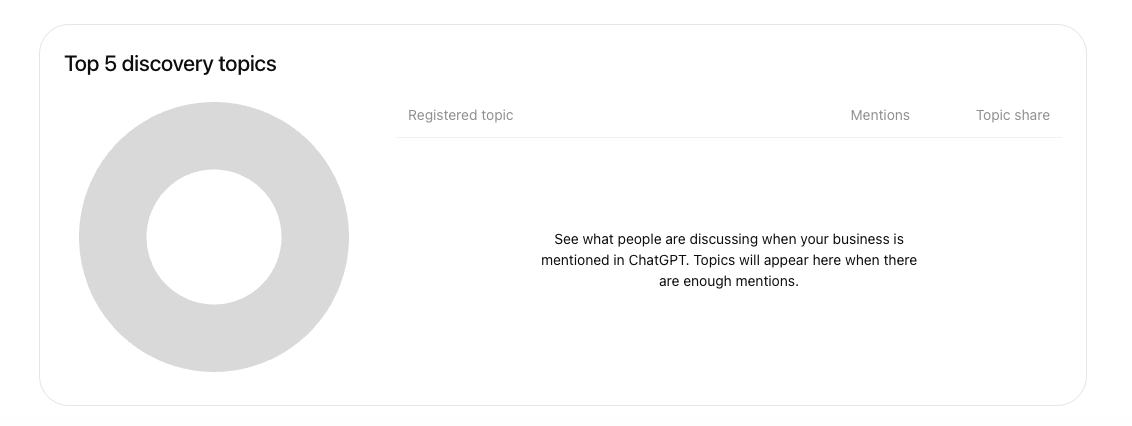
- Discovery insights: See aggregate information about how frequently your business is mentioned, what topics are associated with those mentions, and how many website clicks you receive.
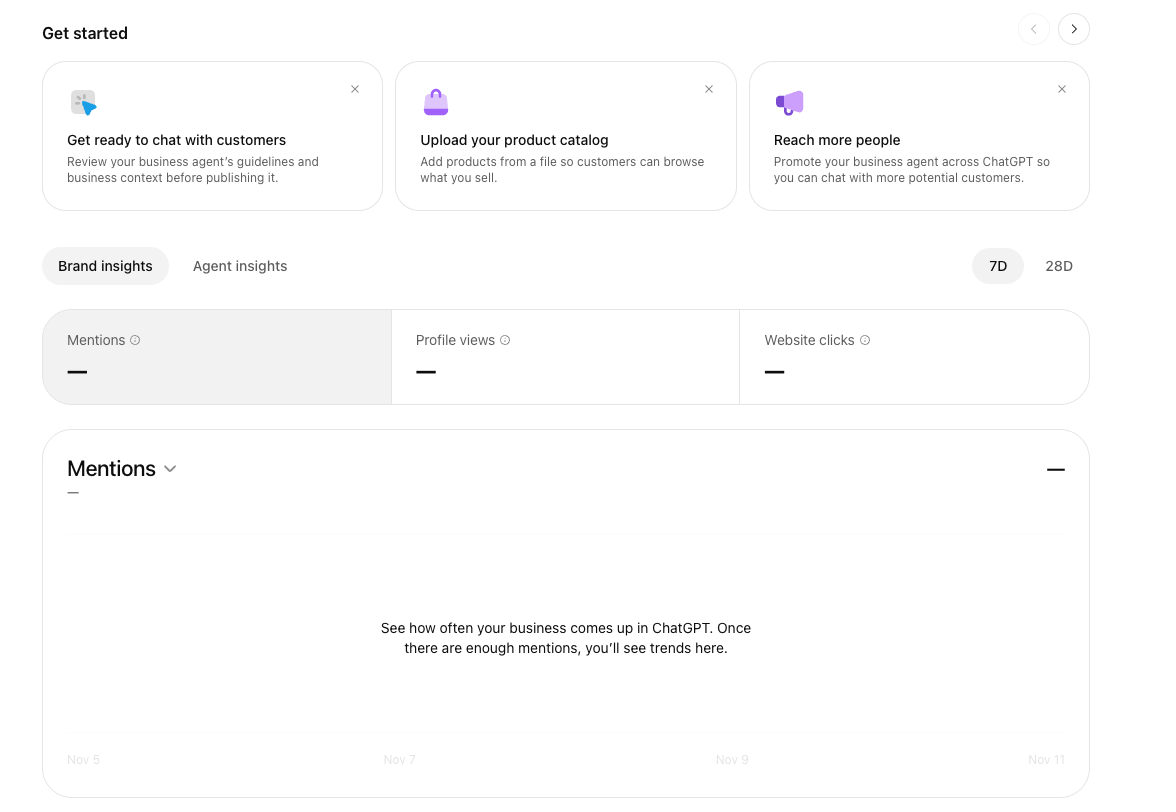
- Business Agents: For eligible businesses, create an AI-powered experience that answers customer questions using business-provided information.
That last capability has an important limitation.
Business Agents are initially available to eligible U.S. ecommerce and online-service businesses. Financial advisory firms should not assume they're eligible to use this capability today.
The ability to claim a business also depends on eligibility, location, verification requirements, and business type.
You don't need a paid ChatGPT Business subscription or an advertising account to claim an eligible business.
And claiming your business doesn't guarantee ChatGPT will recommend it.
Nevertheless, the announcement signals a meaningful development: businesses now have another way to participate in how their information is presented and measured in AI-assisted discovery.
For financial advisors, that's worth understanding.
Why Does This Matter for Financial Advisors?
Think about how someone traditionally searches for an advisor.
They might open Google and type:
"Financial advisor near me."
Or:
"Best retirement planner in Portland."
They get a list of websites, visit a few, compare their options, and hopefully schedule a consultation.
Now imagine that same person opening ChatGPT and asking:
"I'm 58, planning to retire in seven years, and have approximately $2 million invested. I'm looking for a fiduciary financial advisor who specializes in retirement income planning. Can you help me understand what to look for and identify some options?"
That's a very different interaction.
Instead of searching through a list of websites, the prospective client is having a conversation about their financial needs.
They can ask follow-up questions, narrow their preferences, explore different areas of expertise, and research firms.
And that changes what it means to be discoverable.
It's no longer just about whether your firm appears in search results. It's about whether AI systems can accurately understand who you are, whom you serve, and what makes your expertise relevant.
That doesn't mean AI will always recommend an advisor—or that its recommendations will always be accurate.
But it does create another place where prospective clients may encounter your firm before ever visiting your website.
Wait. Do Financial Advisors Still Need a Website?
Yes. And we'd argue that having a strong website is becoming even more important.
For years, your website has served as your digital storefront.
It's where prospective clients learn about your firm, explore your services, read about your advisors, and take the next step.
Now it has another potential role.
Your website is also a source of information that AI search systems may use to understand and describe your business.
Consider two financial advisor websites.
One says:
"We provide personalized financial planning and comprehensive wealth management solutions designed to help you achieve your goals."
The other says:
"We help business owners navigate the financial complexities of selling their businesses, preparing for retirement, and transitioning from building wealth to managing it."
Both may represent experienced, capable advisors.
But the second description provides substantially more information about the clients the advisor serves and the challenges they help solve.
When someone asks AI to help them find an advisor who works with business owners preparing for retirement, that specificity may make the second firm easier to understand as a relevant option.
Of course, there is no guarantee it will appear in an AI-generated answer.
The objective isn't to manipulate AI recommendations.
It's to make accurate, useful information about your practice available to the people—and systems—trying to understand it.
SEO Isn't Going Away. But AI Discovery Is Adding Another Layer.
If you've spent years investing in search engine optimization (SEO), don't throw that work away.
A strong SEO foundation still matters.
But we're also seeing growing interest in Answer Engine Optimization (AEO) and Generative Engine Optimization (GEO).
These approaches focus on helping AI-powered systems discover, interpret, and use accurate information when responding to questions.
For financial advisors, that means thinking about your digital presence a little differently.
Instead of asking only:
"Does my website rank for financial advisor near me?"
Start asking:
"Can AI systems accurately describe my firm, understand my areas of expertise, and connect my services to the kinds of questions prospective clients ask?"
This makes clear positioning, well-organized website content, accurate business information, and credible educational resources increasingly valuable.
And for multi-advisor firms, RIAs, and enterprise organizations, it introduces another challenge: maintaining consistent, accurate information across every advisor and office.
Five Things Financial Advisors Should Do Right Now
You don't need to overhaul your entire marketing strategy because of this week's announcement.
But there are practical steps you can take.
1. See if Your Business Is in ChatGPT
Start by visiting ChatGPT and opening Business Hub from the sidebar on the web.
Search for your firm.
If your business is eligible, you may be able to claim it and complete verification.
OpenAI supports verification methods such as business phone, business email, and website domain, depending on the business.
Managing business information and accessing insights requires additional identity verification.
For larger firms: Coordinate with your marketing and compliance teams before claiming or updating business information, especially if multiple advisors operate under the same brand.
Learn more about claiming a business in ChatGPT.
2. Ask ChatGPT About Your Firm
Here's a simple exercise.
Open ChatGPT and ask:
"What can you tell me about [Your Firm Name], its financial advisors, and the types of clients it serves?"
Then try a more specific question:
"What financial advisory firms in [Your City] specialize in helping business owners prepare for retirement?"
Review the results.
Is your firm's information accurate? Are your services and specialties represented correctly? Are your advisors and locations identified appropriately?
Remember that ChatGPT responses can vary and may contain errors. One response isn't a reliable measure of overall visibility.
But this exercise can help you identify potential gaps in how your business is represented online.
3. Review Your Website
Make sure your website clearly answers the questions prospective clients are likely to ask.
Who do you serve? What services do you provide? What makes your approach different? Where are you located? How can someone contact you?
Review your advisor biographies, service pages, and educational content.
Also, work with your website provider to make sure the information you want publicly discoverable is technically accessible.
For example, OpenAI uses OAI-SearchBot to support discovery through ChatGPT search. Website owners can review their crawler settings to determine whether appropriate access is allowed.
4. Strengthen Your Educational Content
Think about the questions your ideal clients are asking.
A prospective retiree might ask:
"How do I know if I have enough money to retire?"
A business owner might ask:
"What should I consider financially before selling my business?"
An executive might ask:
"How should I think about concentrated stock positions before retirement?"
Creating thoughtful, compliance-approved content around these questions helps demonstrate your firm's expertise.
It also creates information that prospective clients can discover through traditional search and potentially through AI-assisted research.
The goal isn't to publish more content for the sake of publishing.
It's to produce genuinely useful information that addresses your audience's needs.
5. Don't Forget What Happens After Discovery
Here's something we think is especially important.
Whether someone discovers your firm through Google, ChatGPT, a referral, or a social media post, discovery is just the beginning.
What happens next?
Can they easily find the information they're looking for?
Can they schedule a meeting?
Do you have a process for following up with interested prospects?
Are you delivering relevant content that helps build trust over time?
This is where a connected marketing strategy becomes essential.
Being discovered creates an opportunity. Building a relationship is what turns that opportunity into growth.
What About Compliance?
Financial advisors operate in a highly regulated industry, and new discovery platforms don't eliminate existing marketing obligations.
Any business information, promotional claims, advisor biographies, or content maintained through these channels should be reviewed under the firm's applicable compliance policies.
For SEC-registered investment advisers, the SEC Marketing Rule establishes requirements around misleading claims, testimonials, endorsements, and other advertising practices.
Broker-dealers must also consider applicable FINRA communications and supervisory requirements.
For firms with multiple advisors, centralized oversight of business information may become increasingly important as AI discovery capabilities expand.
And as with any emerging AI technology, firms should understand the limitations of the platform before using it for regulated communications.
Looking Ahead: What This Means for Advisor Marketing in 2027
This announcement is only two days old.
We're still learning how Businesses in ChatGPT will evolve, which financial services businesses will be eligible for different capabilities, and how firms will ultimately measure the impact on client acquisition.
But the broader shift is already worth preparing for.
Prospective clients are gaining new ways to research financial questions, compare service providers, and learn about advisors before making contact.
For financial advisors, this creates an opportunity to rethink the role of their digital presence.
Your website is no longer just a place you send prospects.
Your educational content isn't just something you publish to stay visible.
Your advisor biography isn't simply a professional introduction.
Together, these elements help establish who you are, what you know, whom you serve, and why someone might want to start a conversation.
At Snappy Kraken, we believe the future of advisor marketing will require connecting these elements even more effectively—from discovery and education to engagement, conversion, and long-term relationships.
AI may change how the next client finds you. But it's what happens after they find you that creates lasting growth.
And that's where the fundamentals of great marketing still matter.
The information in this article reflects publicly announced capabilities as of November 12, 2026. Business eligibility and features may change. Financial advisors should consult their compliance teams before making changes to regulated marketing communications.
Sources:
Book A Demo Today
Discover how Snappy Kraken helps advisors grow with a powerful marketing system
Request a demoJoin the 25,000+ financial advisors and firms who get marketing insights and strategies right to their inbox!
Enjoy this post? Share it with others.


Wondering if Snappy Kraken is right for you?